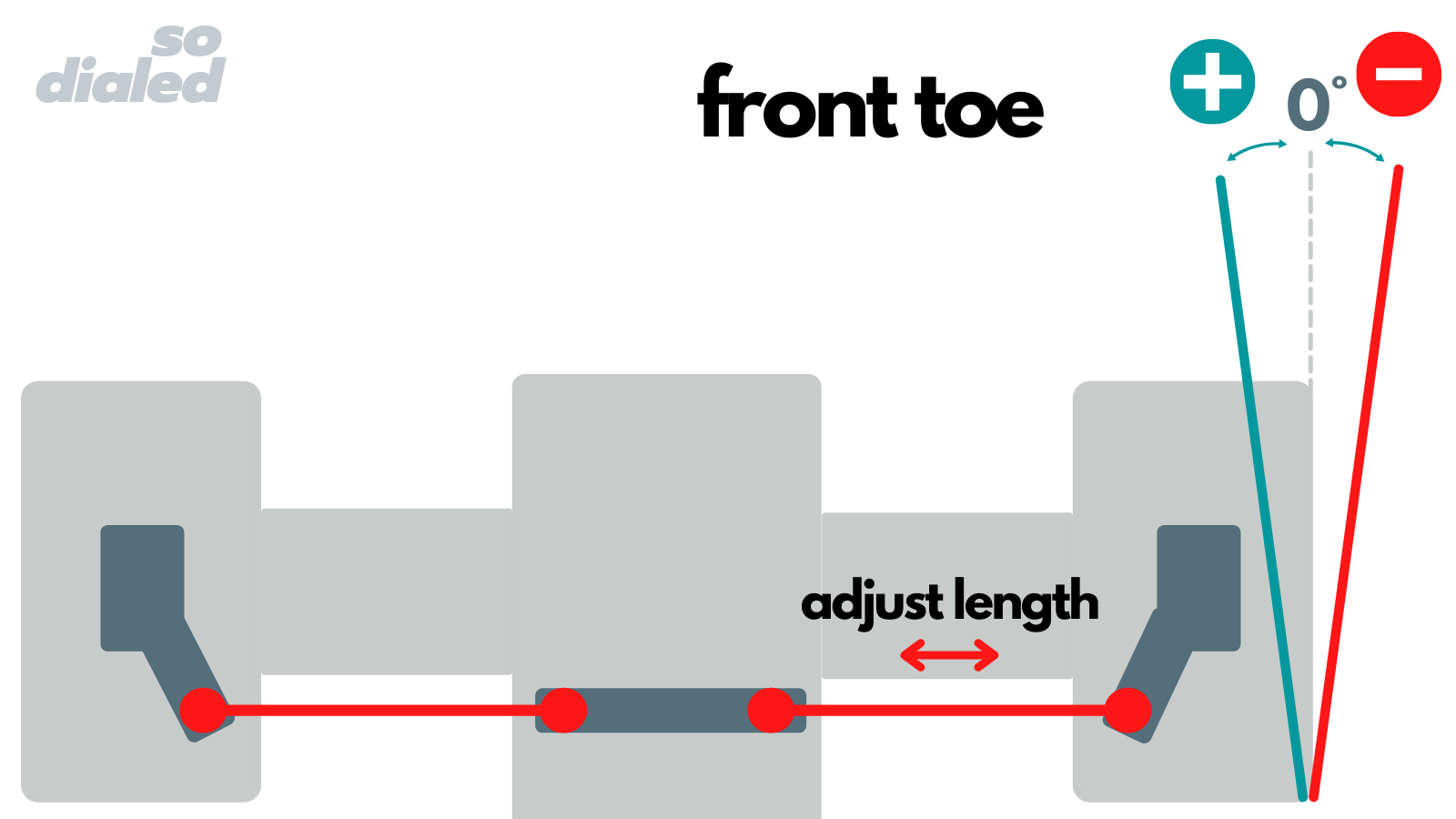
Toe (or static toe) measures the angle of the wheels compared to straight ahead when viewed from above with the car at its natural ride height. Positive toe angles indicate toe-in (wheels point inward) negative toe is “toe-out” with the wheels pointing outward.
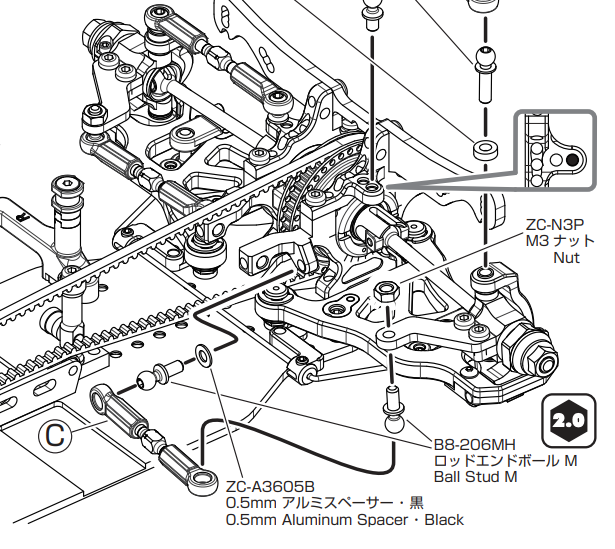
In the front of the car, toe is adjusted by shortening or lengthening the steering links.
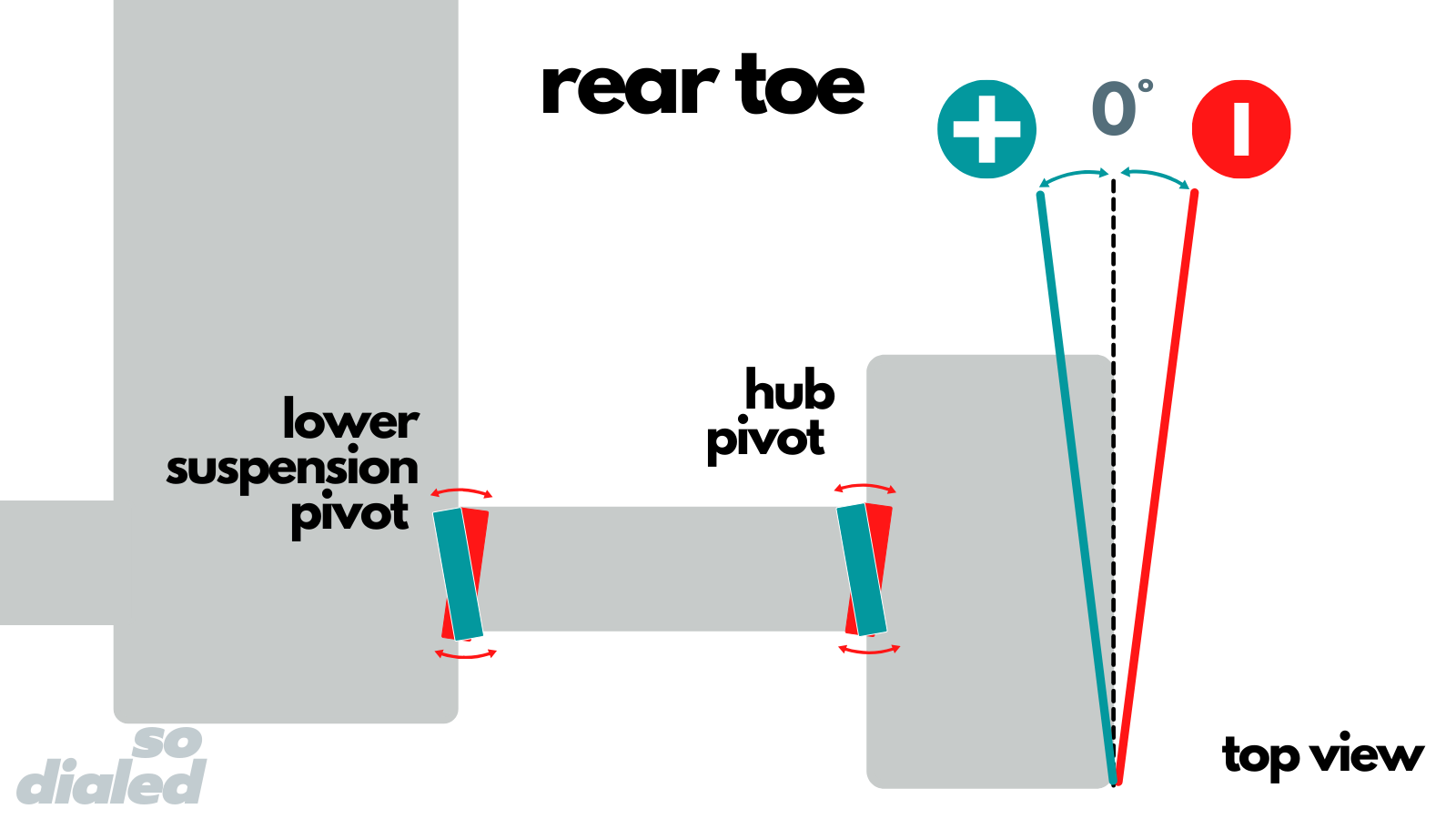
In the rear of the car, toe is usually adjusted one of two ways, and it varies by car (see diagram below):
- Changing the angle of the inner suspension pivot
- Changing the angle of the hub with respect to the suspension arm. This is typically done using different hubs or different inserts placed inside the hub to hold the pin.
Front toe
More front toe-in
- More on-power steering
More front toe-out
- More off-power steering
- More initial turn-in
- Smoother on-power
Rear toe
Less rear toe-in
- Less forward traction
- More high-speed stability
- More rotation in turns
- Generally suitable for high-grip tracks
More rear toe-in
- More forward traction
- Less high-speed stability
- Less rotation in turns
- Generally suitable for low-grip tracks
Toe-out should generally be avoided in the rear.
Active toe
Some on-road cars offer the option of active toe in the rear. This setting is essentially the same as bump steer in the front - it alters the toe angle of the rear wheels as the suspension is compressed, so you can change the handling characteristics of the car based on how compressed the shocks are (where it is in the corner.) Learn more about active toe.