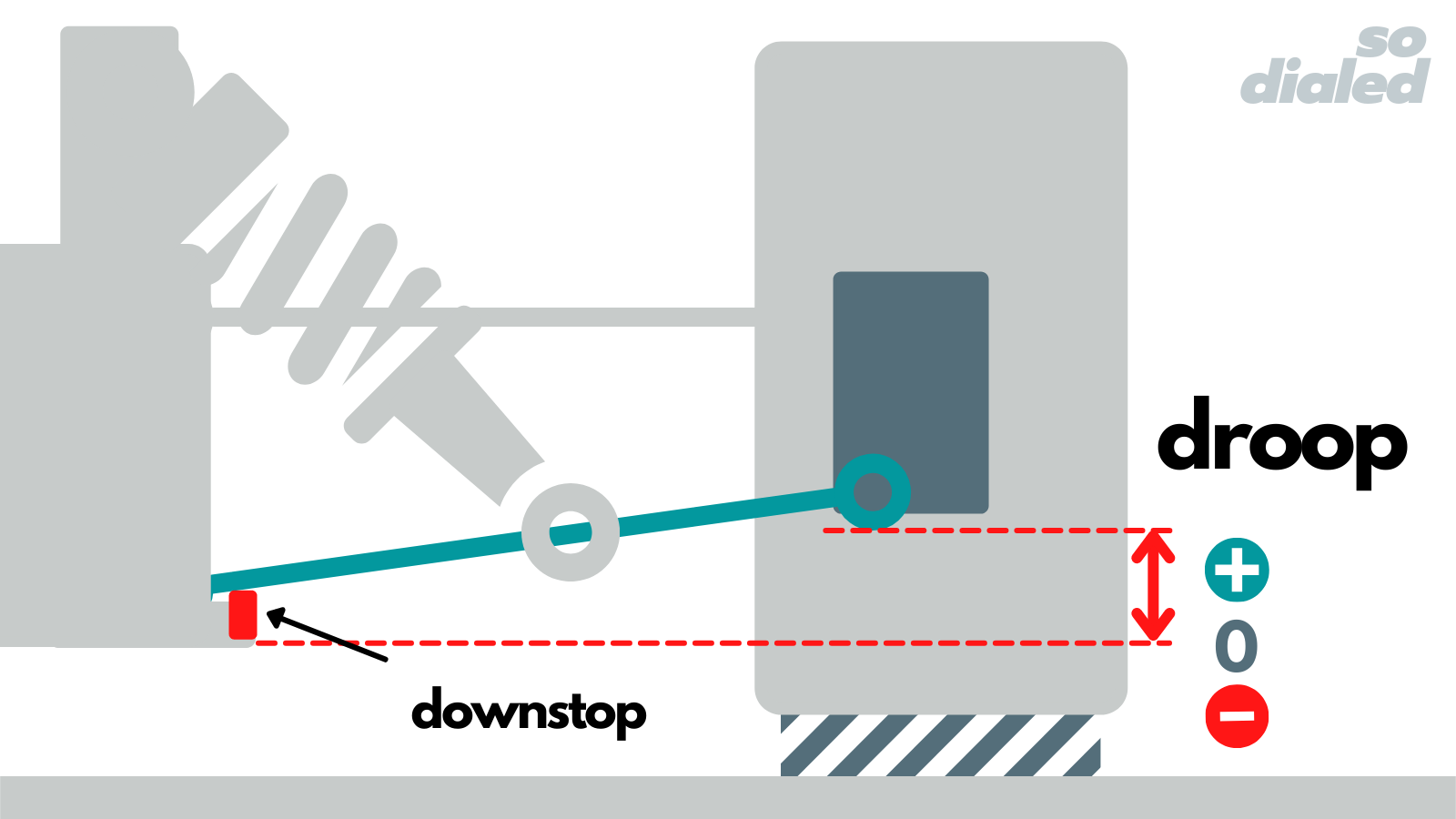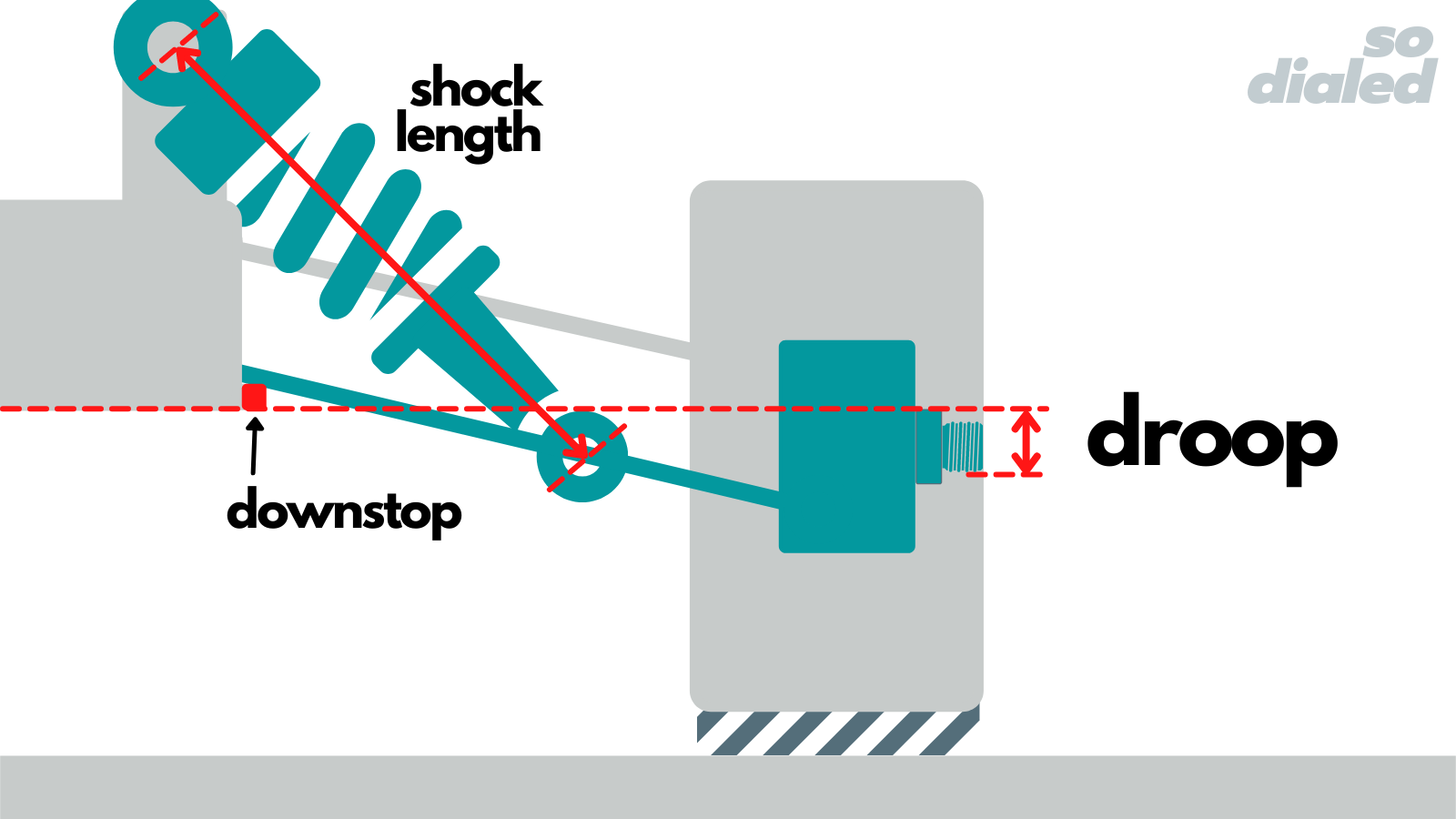
Droop measures how far down the car’s suspension arms are able to travel, or specifically the difference between the car’s natural ride height and its maximum ride height when the wheels just lose contact with the ground.
There are, however, a variety of ways that people actually measure droop. Common methods are (all taken with the car's wheels off the ground):
- Distance between the bottom of the chassis and the bottom of the wheel nut (shown in the diagram above)
- Distance between the bottom of the chassis and the bottom of the hub (shown in diagram below)
- Distance between the center of the shock’s two mounting screws (this is more accurately described as "shock length", but in some types of racing it is called droop and is a good substitute for the other measures.
Droop is sometimes changed via internal shock limiters (which control stroke) or on some cars via specific downstop adjustments that limit how far down the arms can travel..
Droop allows (or limits) weight transfer from one side of the car to the other, or the front to the back.
Please note, changes to the car’s ride height will also change its droop if no other adjustments are made.
Downstop is a setting that controls how far down the suspension arms can travel. It is not the same thing as droop, although many racers use the two terms interchangeably.
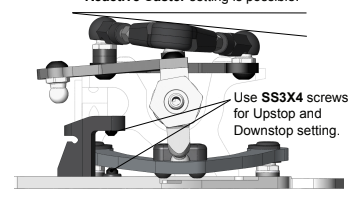
What is the difference between downstop and droop?
Droop is a measurement of the suspension geometry. Droop is set via changes to the downstop or the shock's stroke, just like ride height is a measurement that is set via adjustments to shock pre-load.
Less droop
- Faster steering response
- Fewer traction rolls
- Generally suitable for smooth tracks
More droop
- Slower steering response
- Better handling over bumps
- Better jump landings
Front droop
Less front droop
- Less weight transfer to the rear during acceleration
- Less on-power steering
- More high-speed steering stability
More front droop
- More weight transfer to the rear during acceleration
- More on-power steering
- Less high-speed steering stability
Rear droop
Less rear droop
- Less weight transfer to front during braking
- Less stability over bumps
- More stability under braking
More rear droop
- More weight transfer to front during braking
- Better handling over bumps
- Less stability under braking